Flycatchers (Muscicapidae)
The European robin, known simply as the robin or robin redbreast in the British Isles, is a small insectivorous passerine bird, specifically a chat, that was formerly classified as a member of the thrush family (Turdidae) but is now considered to be an Old World flycatcher. About 12.5–14.0 cm in length, the male and female are similar in colouration, with an orange breast and face lined with grey, brown upperparts and a whitish belly.
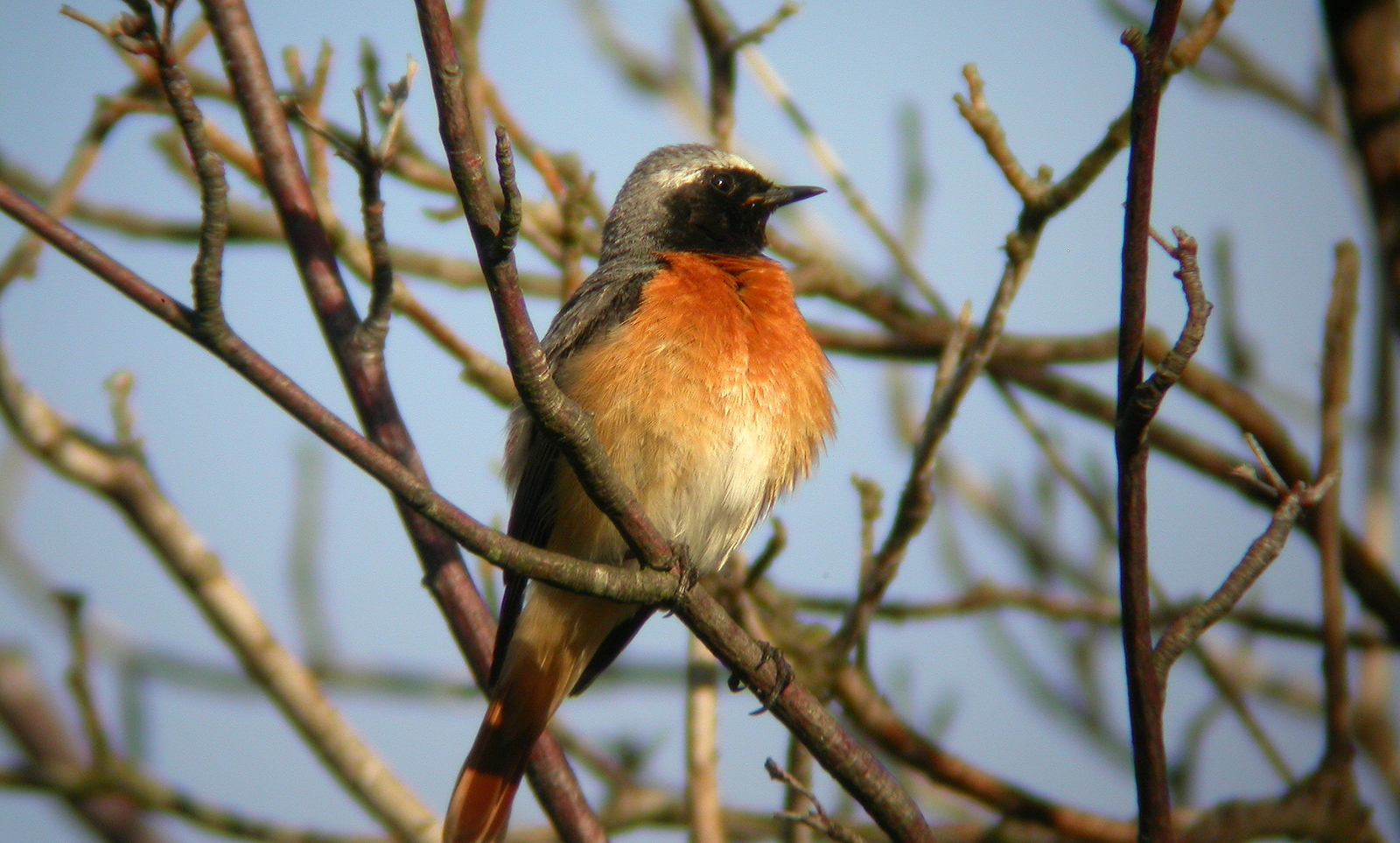
Redstarts are immediately identifiable by their bright orange-red tails, which they often quiver. Breeding males look smart, with slate grey upper parts, black faces and wings, and an orange rump and chest. Females and young are duller. Not to be confused with the Black redstart
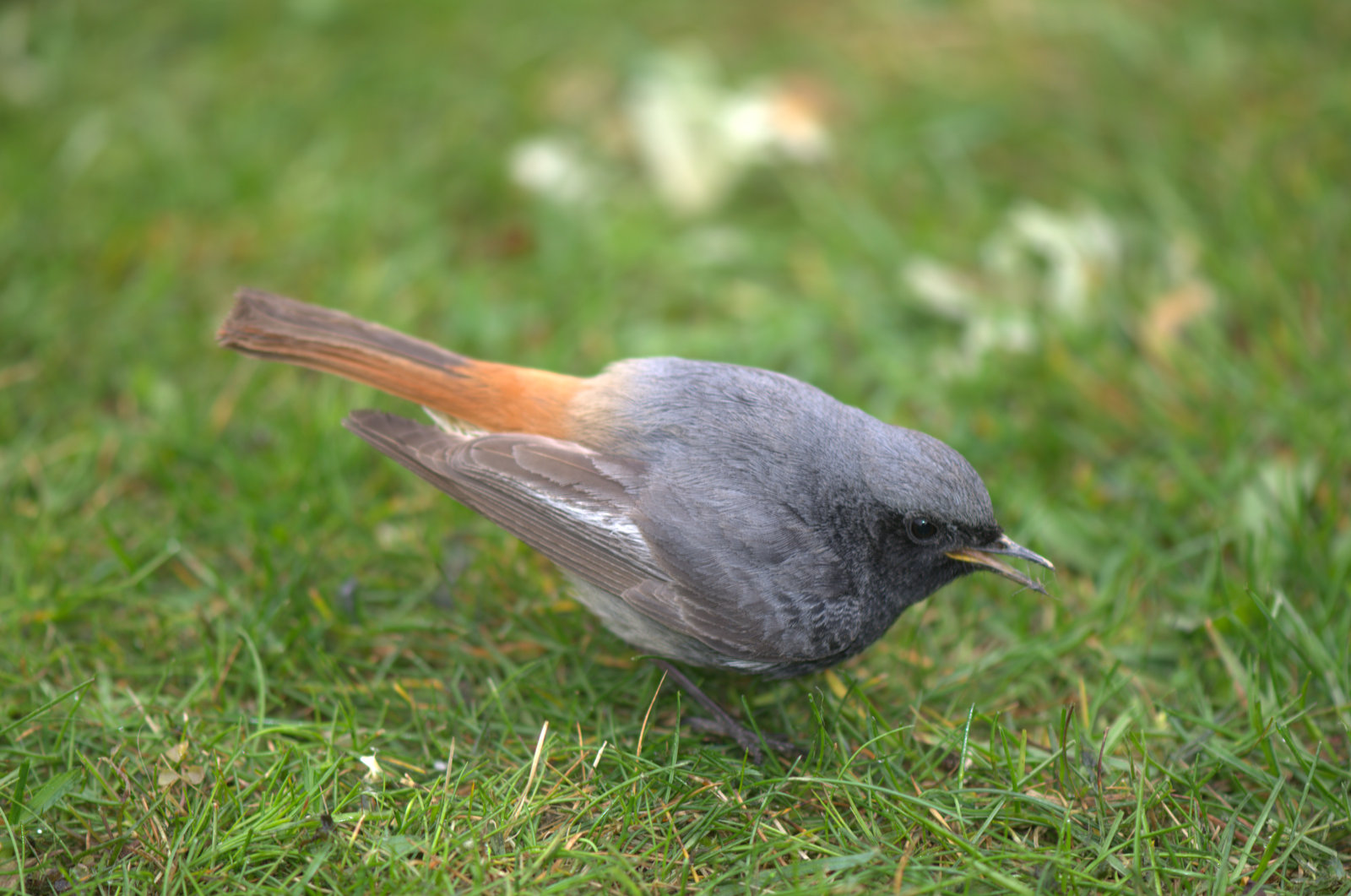
The black redstart is 13–14.5 cm (5.1–5.7 in) in length and 12–20 g (0.42–0.71 oz) in weight, similar to the common redstart. The adult male is overall dark grey to black on the upperparts and with a black breast; the lower rump and tail are orange-red, with the two central tail feathers dark red-brown. The belly and undertail are either blackish-grey or orange-red (eastern subspecies); the wings are blackish-grey with pale fringes on the secondaries forming a whitish panel (western subspecies) or all blackish (eastern subspecies).